
THE MODERN MINT BLOG
Verbena Bonariensis
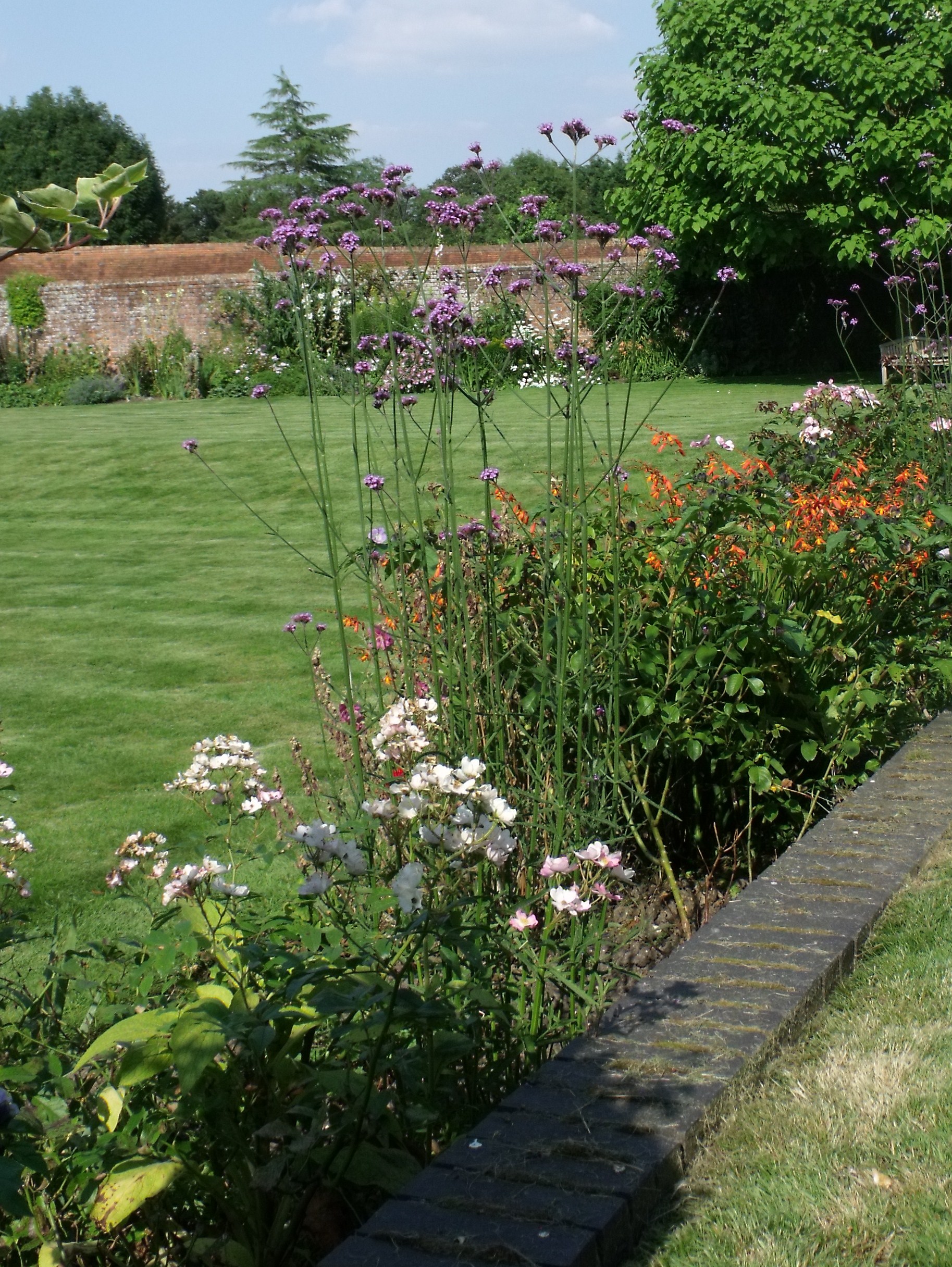
We know we know – Verbena bonariensis is so well known, planted in so many gardens, that it has become uncool to use it these days. Its ubiquitiousness means it gets judged in harsher tones than other plants, as if its popularity has made it offensive.
This is not the Verbena’s fault. It became popular for a reason – it weaves its way around the garden but doesn’t out compete other plants, it provides height and structure, encourages wildlife, is a gorgeous purple, looks good with other plants and fits into schemes as diverse as a country meadow to urban minimalism. Who wouldn’t want a plant like that? (Possibly the people of Buenos Aires, where this Verbena was discovered and given its name ‘bonariensis’… we’ve not noticed it around the city recently. Time for a trip and take a better look? See if the Argentines are enjoying one of their own…?)
At Modern Mint we refuse to let this lack of love for the plant deter us – a heinous crime against the arbitrarial zeitgeist of good taste it currently may be, but it is a plant with wonderful qualities (for an example of how it is currently viewed, note that it didn’t make it into Dan Pearson’s list.)
The wheels will keep turning and it will come back into fashion, hopefully this time considered the great garden plant it is.
Where and how do you use it?
Plant it in full sun or part shade.
Don’t cut it down before winter, let it stand (and seed.)
It looks great alongside shrub roses, or Miscanthus…
It prefers a damper soil. Really, it does. Henk Gerritsen told us, and observations we made from our own experiments lead us to agree…
“I sometimes made deadful miscalculations. For example, I assumed that due to their lanky growth Verbena bonariensis and Verbena hastata loved aridity, but in practise I noticed that they wilted away in dry places. Only later did I read that in the wild both species grow in moist places, in South and North America respectively.”
That concludes our ode to Verbena bonariensis. We hope you dismiss the current vogue of not using Verbena, and enjoy it as the brilliant garden plant it is.
(And click on the link below to take you to the wonderful Henk Gerritsen book we quoted from above…)
Start of the Whitby Topiary Library
I have been offered a space here in the centre of Whitby, south-facing aspect, with some raised beds in, so that I can make a Topiary Library. In my head, a topiary library is a place to showcase the common (and then not so common) shapes you can make out of topiary. With classical topiary plants, as well as some more unusual pieces. This Topiary Library can act as a reference for people to learn more about pruning and clipping. The space is small but the aspect is great and the beds are deep enough to put some plants in. …
Delivery After Dark – From the Makers of The Amelia Project
Last week I spent most nights stood in cold water streams on the moors of North Yorkshire, helping to film a new project called Delivery After Dark from the makers of the Amelia Project. I worked on the Amelia Project back at the end of 2024, lending my terrible vocal talents to a small part in the episode Didius Julianus. But this project is something new – and exciting! – and thankfully only needed me to be filmed, rather than to actually say anything. But not only did I have to stand in cold moving water at midnight, I also …
Modern Topiary (The Book) – Message From Lady Clippers, And Others!
My topiary book – Modern Topiary – has recently been put out as a PDF, which can be read for free. (Have a look here to download and read/share it!) Then last week I received a lovely email from Ann Perkowski of Lady Clippers, who are topiary and pruning specialists in New York (Ann is a brilliant pruning teacher too, who teaches at New York Botanical Garden… check out her work and Lady Clippers website.) Hi Darren, I had to write you how much I love reading your Modern Topiary. I’m not sure I’ll ever be quite done with it because I’m …