
THE MODERN MINT BLOG
Essex Meadow
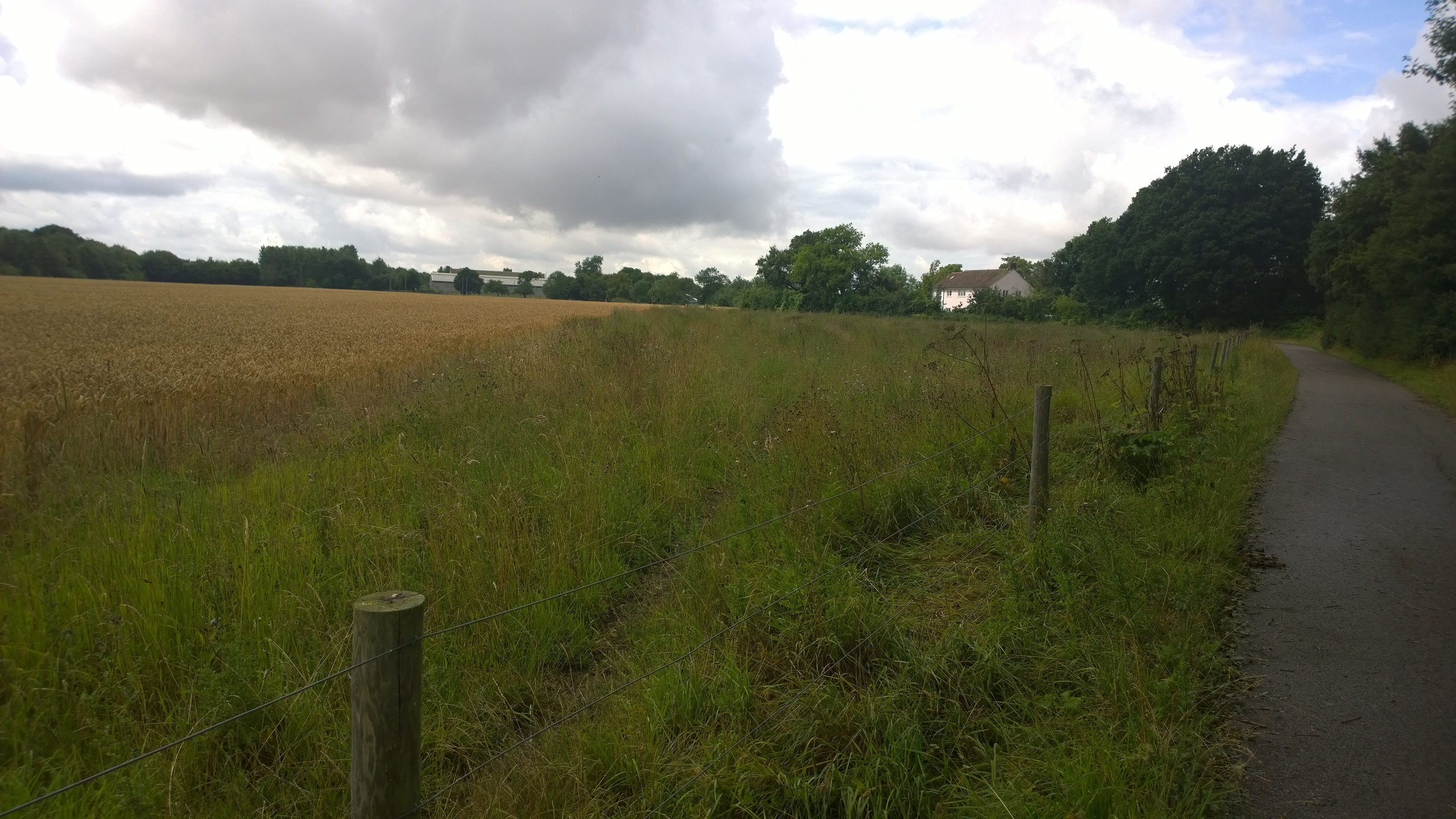
Some inspiring pictures of an Essex Meadow, from just outside of Chelmsford – this should give you an idea of the meadow you can create in your own garden.
We love meadows because they are a haven for wildlife. To be fair, even undisturbed long grass will attract insects and other animals, who aren’t as fussy about their postcode as humans are. Though long grass is great, when you see flowers that are also providing nectar and pollen you know you are somewhere special.
Meadows are a recent addition to the gardeners armoury, but are in fact nothing more than a man-made agricultural system that has been used for years – take a large tract of land that gets lots of sun, let it grow until July/August, then cut it down and store it for farm animals winter feed.
They are dynamic, ever-changing tapestries – one year may see a huge display of cowslips, the next year the golden yellow buttercups take over – and this is one reason they have become fashionable recently, because they appear to be hugely diverse, with more species per metre squared than you would find in an average flower border.
Biological diversity is the current Governmental watchword!
(The other current trend is a zeal for ‘Native Planting’, which appears to contradict entirely the lust for diversity – the native British flora is so small (about 1000 flowering species, around 200 of which are described as ‘doubtfully native’) that if we created a meadow of the most common UK plants all we would get is a big patch of nettles!
These opposing Government aims for the natural stewardship of our country are a tacit version of a naive Farage policy – we want to protect what is ours, ‘rightfully’ ours… except when it benefits us to fill the gap with ‘aliens’ who are more useful and harder working…)
The first benefit a meadow will bring to your garden is that of a lifestyle choice – once established, the maintenance regime is one hour per year for every ten square metres of meadow. The creation of the right plant community means each flower will be able to co-exist with little input from you. As mentioned above, some years one species of flower may prefer the weather conditions and be the most visible, but the following year a different weather pattern will stop it dominating and allow something else to flourish.
A perennial meadow (one which comes back year after year e.g. rhubarb is a perennial because you plant it then leave it alone, while broad beans are not because you have to harvest the seed and re-sow them every spring) will, once established, be long lived and resilient. Once in motion and growing you may not have to plant or add anything else for at least ten years.
If this interests you, please do see about becoming one of our Ten Meadows.
And last of all, for more information on making meadows try these books – they are an excellent place to start…


Topiary, The Art Garden at The Henderson
The Art Garden at The Henderson in Hong-Kong has now opened to the public. I joined the project last March, to work with Gillespies Landscape Architects on the topiary that had been designed for the Art Garden, which gives a calm, green space below the extraordinary Henderson skyscraper designed by Zaha Hadid Architects. The garden has been designed with butterflies in mind, so lots of nectar plants, and has other art projects and installations within its footprint. The history of the site is interesting too – it was originally the first cricket ground in Hong-Kong! So still a green space….! …
ClipFest 2025
On Sunday June 22nd there will be Clipfest 2025 at Ichi-Coo Park in Surrey. It is a celebration of all things pruning and topiary, and I will be there in my capacity of teacher at the European Boxwood and Topiary Society to demonstrate tool cleaning and sharpening, and how to clip. Tickets can be found here on Eventbrite. We are hoping for great weather and to see lots of keen pruners getting their shears out and joining us at this amazing garden! And for more on topiary…
Secateur Holders
A present arrived from Norway today, from a student who visited last February to work with Chris Poole and I on learning topiary. His new hobby – a beautiful and neatly stitched secateur holder. Thrilled with this! The holder will save me keep losing my secatuers too…! Thank you Bernt! It was the same student who introduced me to the APA with whom I am doing a talk at the end of March. Tickets can be bought here for ‘Defining The Essence – Aesthetic Pruning in the Garden’. Do join the European Boxwood and Topiary Society for that!